For Lawyers

Practice Lab

How this firm actually runs — the systems, the workflows, the software, and the mistakes. Published free, for other lawyers.

Why this exists

Most people with a real legal problem never see a lawyer. Not because they have no claim, and not because no lawyer would take it — but because an hour of legal help costs more than they have. Legal aid is chronically underfunded; pro bono is essential and will never scale to the size of the gap.

If we are serious about opening the courthouse door to the people currently standing outside it, there is one lever with enough leverage to matter: the cost of producing legal work has to come down. A lawyer who can carry more files well is a lawyer who can say yes to files the economics would otherwise rule out.

So everything here is written for other lawyers — solos, small firms, anyone whose bottleneck is hours rather than talent — and everything here is free.

The only thing we ask

There is no signup, no course, no subscription, and nothing for sale. We are not asking for donations.

If something here saves you time, spend some of it on people who could not otherwise afford you.

Take the case at a rate that works for someone on a fixed income. Keep a sliding scale. Say yes to the file you would otherwise have to turn down on economics. That is the entire price.

Writing

Articles

Tool
July 27, 2026 · 16 min

Run It Yourself, Then Let the Client Choose

The practical stack for running Qwen on firm hardware — models, runtimes, quantization, what fits in how much memory — and the client-facing tier election it makes possible. If the client picks the tier, the routing has to enforce it.

Read more →
Essay
July 20, 2026 · 19 min

The Practice of Law in 2035: Predictions, With Failure Conditions

Most legal futurism is unfalsifiable, which is why it is always half-right and never useful. Twelve predictions about how AI reshapes legal practice — each with the mechanism driving it and the specific evidence that would prove it wrong.

Read more →
Tool
July 13, 2026 · 17 min

How Do You Know It Works? Evaluating an AI Legal Workflow

Nobody in law builds evaluation sets, so nobody can tell a workflow that got better from one that quietly got worse. Ground truth, the metrics that actually matter per task type, and why cost-weighted error is the only honest score in a law office.

Read more →
Essay
July 6, 2026 · 18 min

Legal Aid Turns Away Half the People Who Ask. Here Is a Market That Would Change That.

Legal aid can't hire against one-year grants, and volunteer hours consume the supervision they're supposed to add. A forward, specialty-tagged purchase commitment fixes both — and bundles the one input big firms actually have to give.

Read more →
Tool
June 29, 2026 · 18 min

Retrieval Is the Whole Game

Why dumping a matter file into a context window fails, why embedding search underperforms specifically on legal text, and how to build retrieval that recovers the right paragraph with a citation attached.

Read more →
Essay
June 22, 2026 · 14 min

An Unattributed Entry Is Honest. A Confidently Wrong One Bills the Wrong Client.

Every system that automatically ties work to a matter faces the same temptation: always produce an answer. In a law office that is the wrong design, and the reason is Rule 1.5.

Read more →
Workflow
June 15, 2026 · 12 min

Inbound Is an Attention Problem, Not a Volume Problem

Twelve calls, four web inquiries, a portal message and three e-service notices is not a lot of information. It is a lot of interruptions. On classifying inbound automatically, routing it by consequence, and the discipline of suppressing what does not matter.

Read more →
Tool
June 8, 2026 · 13 min

Running Models on Your Own Hardware: When It's Worth It

The strongest confidentiality posture is client data that never leaves the building. Here is what local models actually cost, what they are genuinely good at, where they fall down, and the hybrid architecture that is usually the right answer.

Read more →
Workflow
June 1, 2026 · 12 min

The Work You Did and Never Billed

Unbilled time is not a discipline problem, it is a capture problem — the work happened somewhere your billing system could not see. On reconstructing it honestly, why rounding decides whether approved equals billed, and the one rule that must never bend.

Read more →
Essay
May 25, 2026 · 13 min

The Failure That Says Nothing

The dangerous bug in a firm's own software is never the crash. It is the button that does nothing, the file saved to a default location, the integration that stopped syncing in March and told no one.

Read more →
Workflow
May 18, 2026 · 12 min

From the Scanner to the Calendar: A Document Intake Pipeline

The mail arrives as a stack of scanned PDFs and leaves as filed documents, calendared deadlines, and a short list of things somebody has to decide. Six steps, and a clear rule about which ones a human must approve.

Read more →
Essay
May 11, 2026 · 14 min

The Discovery of Your Prompts

Every AI-assisted workflow generates artifacts — prompts, retrieved documents, intermediate drafts, transcripts. Are they work product? Are they privileged? Does a litigation hold reach them? Nobody knows yet, and most firms are retaining them without having decided to.

Read more →
Tool
May 4, 2026 · 15 min

Connecting Claude to Clio — and Why I Had to Build It Myself

There is an open standard for exactly this problem. My practice management vendor does not implement it. So the connector is four hundred lines of my own Python, and the interesting part is not the code — it is why every firm is writing it separately.

Read more →
Workflow
April 27, 2026 · 12 min

Ask for the Matter, Not the Path

The software you build for your own firm will be used by lawyers and legal assistants, not engineers. The single fastest way to make it unusable is to inherit the vocabulary of the tools you built it with.

Read more →
Workflow
April 20, 2026 · 15 min

Build a Firm Wiki Your AI Can Query

The reason AI gives you generic legal work is that it has no idea where it is. A structured Obsidian knowledge base — plain markdown, real schema, provenance on every fact — turns a general assistant into one that already knows your practice.

Read more →
Essay
April 13, 2026 · 12 min

What You Owe the Client You Automated

Do you have to tell a client you used AI on their matter? What happens to the fee when a task takes twenty minutes instead of two hours? The disclosure question is genuinely unsettled — the fee question is not, and it cuts against the lawyer.

Read more →
Workflow
April 6, 2026 · 11 min

Never Compute a Deadline From Memory

Minnesota's three-day mail rule moved in 2020. Rule 6.05 was abrogated; the text now lives in Rule 6.01(e). If you learned it the old way you have been carrying a wrong rule for years — and so has every AI you ask.

Read more →
Workflow
March 23, 2026 · 12 min

Verifying Form Is Not Verifying Truth: Building a Citation Gate

A fabricated case is the easy failure — it does not exist, so somebody notices. The dangerous one is a real case, correctly cited, standing for something it never said. Here is the four-pass verification gate that catches it.

Read more →
Workflow
March 9, 2026 · 13 min

Hire Specialists, Not an Assistant

One general-purpose AI assistant gives you a capable generalist with no limits and no handoffs. A real office is not organized that way, and neither should this be. On writing agent briefs, and why the limits matter more than the capabilities.

Read more →
Workflow
March 2, 2026 · 11 min

Your Templates Are Your Real Knowledge Base

Every firm's institutional knowledge lives in its form file, and every firm's form file is quietly wrong in places nobody has checked since 2014. On template hygiene, stale-rule propagation, and why generation should populate a template rather than rebuild one.

Read more →
Essay
February 23, 2026 · 16 min

The Perfect Is the Enemy of the Good: How Lawyer Regulation Prices People Out of Justice

Nine of every ten ethics complaints in Minnesota close with no discipline at all — and every one of them was answered by a lawyer. A look at what our regulatory apparatus costs the people who never get a lawyer in the first place.

Read more →
Essay
February 9, 2026 · 14 min

Six Windows: The Hidden Cost of Practicing Law With AI

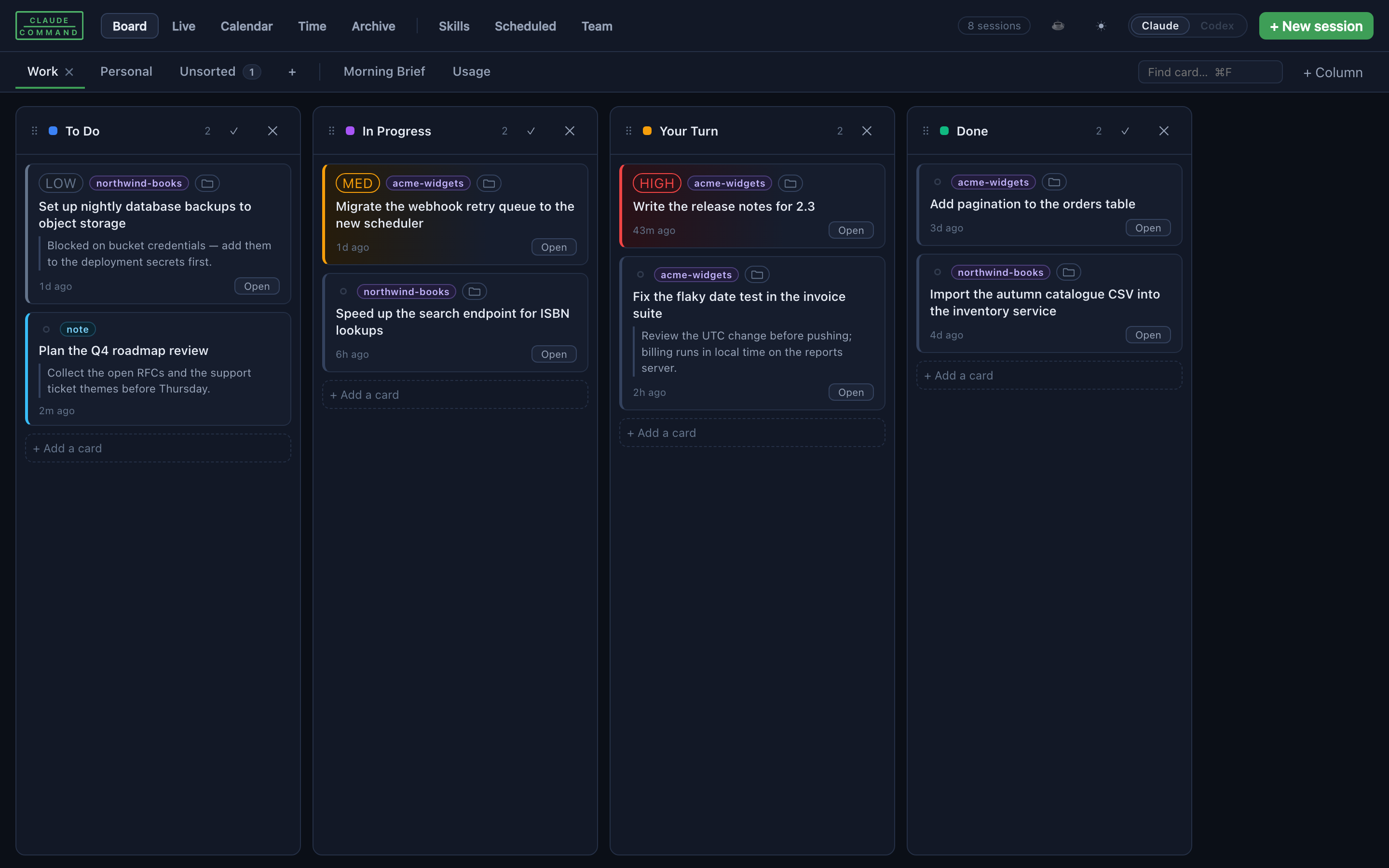
AI can draft, research, and summarize. It cannot tell you what you were doing. A working attorney on the mental load of parallel work — and the kanban board built to carry it.

Read more →

A note on what you will not find here

Nothing in this section discusses a client, a matter, or a real case. Screenshots use invented clients and file numbers. Everything here is general commentary on practice management — it is not legal advice, it is not ethics advice, and reading it does not create an attorney–client relationship. Every lawyer is responsible for their own compliance in their own jurisdiction.